
Hi, Gel Pen Pals! ✦
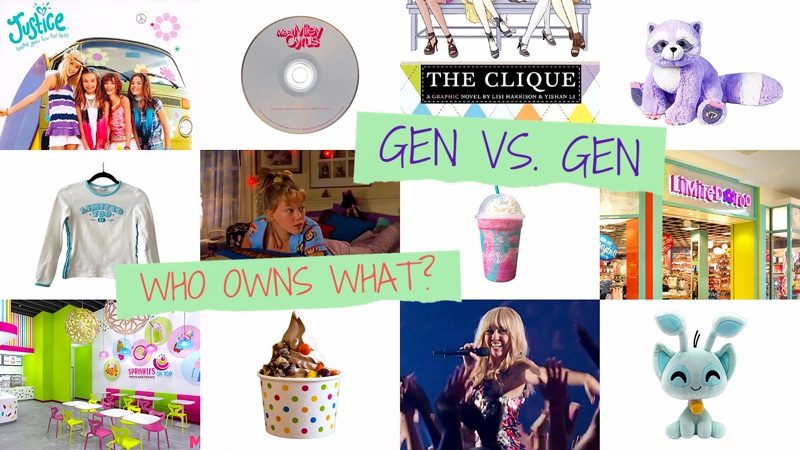
Welcome back to the Gel Pen Clubhouse! I hope you're having a fantabulous day! If you're chronically online like I am, you might have noticed a little generational debate going on. There's some Millennial vs. Gen Z tug-of-war happening over who gets to claim certain pop culture moments.
Of course, plenty of pop culture is shared between generations, but there are some things that feel very specific to one... or does it? I first noticed this back in early spring, when Disney+ released its 20th anniversary special for Hannah Montana. The comments on every social media platform were endless: Was Hannah Montana a Millennial thing or a Gen Z thing?
Then I noticed the debates popping up all over again when Disney+ premiered Camp Rock 3 earlier this summer. And now Netflix is releasing Hollywood Arts, a spin-off of the Nickelodeon TV show Victorious. Personally, I think Gen Z can easily claim Victorious. It's a staple of 2010s kids' TV. No questions asked. Funny enough, I hear there's a new character in the Victorious reboot named Jenn Z, which is kinda silly when you think about it. Isn't the reboot catering to Gen Alpha? Anyways... whatevs.
But I've noticed this generational debate extends way beyond sitcoms and TV movies. It's kind of everywhere—from fashion fads and trendy snacks to mall stores and virtual pets. And what's interesting is that a lot of the things we're fighting over are things that both generations actually experienced. It's almost like a push-and-pull between the two generations.
In other words, the girls are fighting!
I'm, clearly, a Millennial. I was around 11 when Hannah Montana first aired in spring 2006, so I was smack-dab in the target demographic. The show was aimed at the tween crowd, with girls ages 6 to 14 being its core audience, meaning if you were born roughly between 1992 and 2000, Hannah was probably a pretty huge part of your after-school TV routine—especially when you were pretending to do your homework.
But that's also right around the cutoff between Millennials (stops at 1996) and Gen Z (begins at 1997). Hannah Montana straddles the two generations, so I guess it's no wonder we're all fighting over her.
Tbh, I find this whole Zillennial culture thing really fascinating. Who claims what, and why? I've noticed that a lot of the things we're fighting over come from roughly the same little cultural window—from when the first Twilight book was published to when the first Twilight movie came out.
It's that mid-2000s tween period, when younger Millennials and older Gen Z were growing up around the same things, just at slightly different ages. I was inspired to write this little blog post because I wanted to take a peek behind the curtain at some trends from yesteryear and compare the two sides of this cultural cusp: what feels Millennial and what feels Gen Z?
It's almost like a big sister/little sister relationship. We grew up around some of the same things, but experienced them at completely different ages. What's aspirationally older? What's spiritually younger?
Yeah, I know, I know. Both can claim it. But what if something could only belong to one?
Hypothetically, of course. ;)
These are my hot takes, so feel free to sound off in the comments. I love a little debate.
Let's dive in. Music. Snacks. Toys. Tee-shirts. The middle school essentials you could buy with $20 or less at the mall on a Saturday night.
Hot Take ✦ Miley Cyrus vs. Hannah Montana
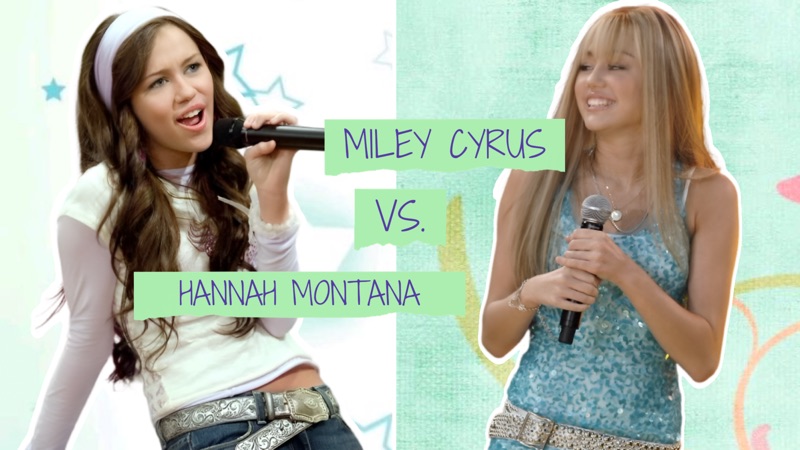
In 2008, Hannah Montana & Miley Cyrus: Best of Both Worlds Concert hit local movie theaters. By this point, I was 13, in middle school, and still very much watching Disney Channel while also dabbling in teen shows like Degrassi, The Secret Life of the American Teenager, and 90210.
One of my friends in middle school, Madeline, and I begged my mom to drop us off at the movie theater to see the Hannah Montana Best of Both Worlds concert film, with the Jonas Brothers as the opening act. Madeline and I were huge Nick Jonas girlies, so of course we had to go support our manzzzz. ;P
But imagine our surprise when the audience was filled with literal seven-year-olds in head-to-toe sparkly outfits and blonde wigs. At 13, we were some of the oldest people there besides the parents.
I wasn't really embarrassed to be there, but I was definitely self-conscious. Was I too old to be there?
And really, I think that experience sums up my relationship with Hannah Montana pretty perfectly. Because of Hannah's adorable Justice mall-store aesthetic, Club Libby Lu makeup, and catchy bubblegum-pop lyrics that I still love to this day, I'll probably always associate Hannah with Gen Z kid culture.
Miley, though? Miley was always a little more raw and edgy from the get-go.
During the Best of Both Worlds era, there was a very clear distinction between Hannah the character and Miley the girl behind her. And at 13, I was much more interested in Miley.

Hannah was for the kids singing and dancing in the movie theater aisles. Miley was for the girlies like Madeline and me.
Miley’s roughly two years older than me, and at the time, her iconic YouTube presence with her background-dancer BFF Mandy Jiroux, her penchant for cowboy boots and boho-chic essentials, and her very public relationship with Nick Jonas had me way more invested than whether Hannah was going to end up with Jesse or Jake on the show. (But literally always team Jesse, though. Be so forreal.)
Her real life just felt a little more interesting to slightly older girls like me. Hannah was the aspirational tween fantasy. Miley was the girl you were watching grow up with you.
And I think that's the distinction I'm getting at.
Snacker's Choice ✦ Fro-Yo vs. Frappes
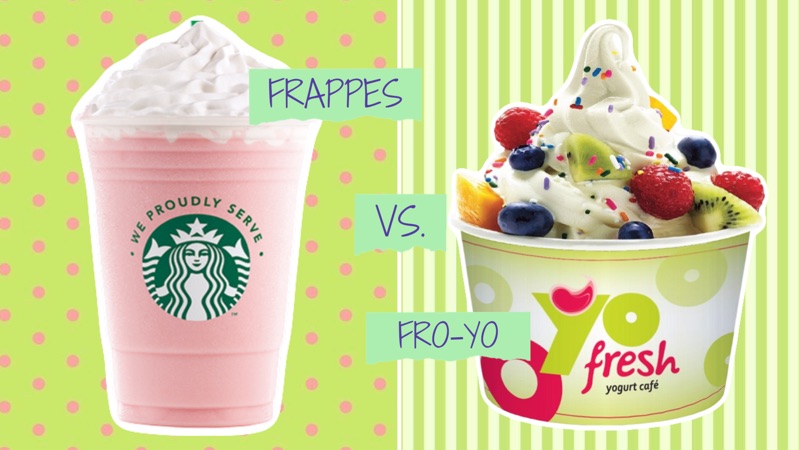
Alright, Gel Pen Pals, this is a choice I'm leaving up to you! I really, truly can't decide which side of the generational divide these belong to.
This summer, I watched Elle on Amazon Prime, the Legally Blonde prequel set in the '90s. There's a cute little scene where Elle Woods creates the very first Frappuccino after moving from sunny LA to gloomy Seattle. Obviously, that's not how the Frappuccino was actually invented, but it did make me think about how deeply I associate frappes with Millennial girl culture.
And listen, I know it's basically a milkshake with coffee in it. I also know the coffee snobs are glaring at me through the computer screen right now. But I don't really care. They're yummy. And cute. Bite me.
When I was in middle school, I lived in a small town that didn't have a Starbucks yet. But my mom would take us to a big mall in a big city in North Florida for back-to-school or holiday shopping, and that mall had the holy trinity: Abercrombie, Olive Garden, and Starbucks. Obviously, we had to hit up all three like the divas we were.
I'd alternate between different Frappuccinos, but my favorite was always Java Chip. I even remember seeing paparazzi photos of Miley leaving The Coffee Bean and Tea Leaf in Hollywood with two or three drinks in one hand. In retrospect, maybe this explains my caffeine addiction at the ripe old age of 32. Oops. Frappes eventually became iced coffee, and iced coffee eventually became Alani's. I can literally stop anytime I want.
A few years later, the fro-yo scene hit my small Georgia town. We were a little late to the frozen-yogurt craze, but when I was in high school, we suddenly got, like, three frozen yogurt shops in one year. They just popped up everywhere.
Come to think of it, where did they all go? And why were they all replaced with those weird nutrition-tea pyramid-scheme places? Don't know what I'm talking about? Visit any small Southern town and take a look around. Eww.

After ballet lessons, my mom and I would hit the fro-yo shop, feeling like Lauren Conrad and the rest of The Hills girls going to Pinkberry. And OMG, I LOVED the aesthetic. I still do. The colorful polka-dot cups, the sour gummy worms, the sleek, futuristic, colorful décor—it was basically the perfect early-2010s snack experience.
So now I'm torn. Frappes feel very Millennial: a little more aspirational, a little more LA it girl. If y'all were there, you know. The Starbucks cup was an accessory. If you happened to grab a Frappuccino before school, that cup was staying with you until last-period bio. Even if it was empty, it wasn't going in the trash. The Starbucks cup was part of the fit check.
But here's the thing: they're both kinda making a comeback. The return of the Unicorn Frappuccino at Starbucks this summer brought the colorful, over-the-top drink back for one weekend, and Starbucks itself leaned hard into the nostalgia. The 2010s are back, babe. The resurgence of early-2010s fashion and pop culture has brought that whole colorful Starbucks-girl era back into the conversation.
And fro-yo is getting swept up in that nostalgia too... at least on my TikTok feed. I see little fro-yo aesthetic edits all the time! I feel like there's a “Keep Calm and Carry On” revival right around the corner. But we're getting off track. Sorry.
To me, fro-yo feels like she shares the same characteristics as Gen Z: colorful, customizable, and a little more quirky. The kind of treat you grab with your friends after soccer practice, ballet, or marching band. But maybe, just maybe... they're both ours.
Computa Nerdz ✦ Neopets vs. Webkinz
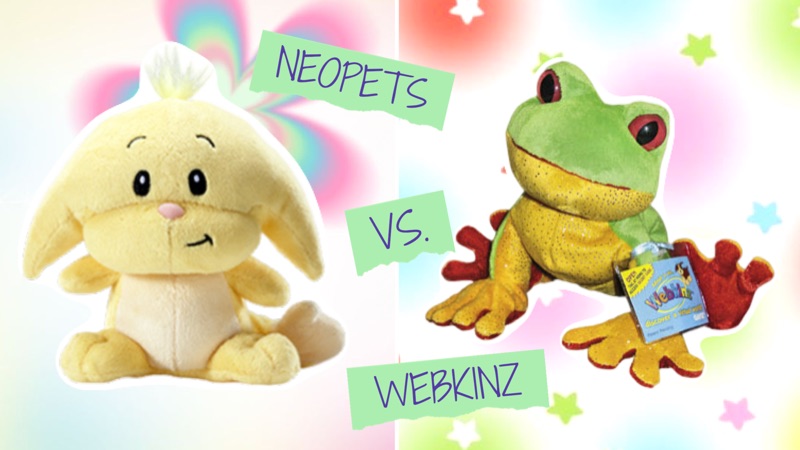
Okay, let's talk virtual pets.
Whether you took care of them on the World Wide Web, video game consoles, teeny-tiny devices, or simply collected them through trading cards and plushies, odds are, you had an obsession with one of these brands. The 2000s weren't just a time; they were THEE time for Pokémon, Digimon, and Tamagotchis to reign supreme.
For people around my age, the tween online-pet craze of the mid-to-late 2000s really came down to Neopets and Webkinz.
On paper, the concept was pretty simple: adopt a pet, take care of it, play games, and earn currency to keep your little virtual creature happy. But in reality, the two experiences were pretty different.
Neopets was a whole magical online world. There were fairies, different lands to explore, shops, games, stories, customization, and an active online community. You didn't necessarily need to buy anything physical to participate. You could just make an account and dive headfirst into Neopia.

Webkinz, on the other hand, was built around the physical toy. You bought a Webkinz plushie, entered the code that came with it, and suddenly your stuffed animal had a virtual life, too. From there, you could take care of your pet, play games, earn KinzCash, decorate rooms, and explore Webkinz World. There was something really fun about taking a stuffed animal you could physically hold and giving it a whole little digital life of its own.
This one is a little interesting for me because I actually had both. But I definitely cared more about one than the other. I received a Webkinz from a family friend for my birthday one year. While the plushies were really freakin' cute, I genuinely tried to give my Webkinz the same love and attention I gave my virtual pets on Neopets.
Webkinz always felt like it skewed a little younger to me. I remember them being the craze at the Hallmark store, but by the time I was going into Hallmark, I was much more interested in checking out the newest Vera Bradley prints.
That doesn't mean I didn't understand the appeal, though. If anything, I think Webkinz was probably the perfect combination of stuffed animal + video game + collectible for a kid. You could pick out the animal you wanted, give it a name, bring it home, and then log on and discover that your new plushie had an entire digital life waiting for you. There was something pretty magical about that.
It just wasn't my kind of magical. Neopets, on the other hand, was a completely different story.
I was introduced to Neopets through other kids on the bus ride home, and once I got sucked into that world, I was in. I had my baby pink Bruce, my adorable lime green limited-edition Cybunny plushie from Limited Too, and a whole virtual world to explore. And looking back, I think that's the biggest distinction for me. Neopets felt like the internet before social media. Webkinz felt like a really fun game.
Neopets was something you could live in for a little while. It felt weirdly independent, like you had stumbled upon this entire secret world that existed outside of whatever was happening IRL. Webkinz was more like something you could play. You had your cute plushie, your virtual pet, your games, your rooms to decorate, and your KinzCash to earn. It was tangible in a way Neopets wasn't. You could actually take your pet off the computer and carry it around with you.
And maybe that's why, even though I technically had both, Neopets stuck with me in a way Webkinz never really did. So when it comes to this particular generational showdown, I already know where I stand.
Wild Card ✦ Paul Frank vs. Bobby Jack
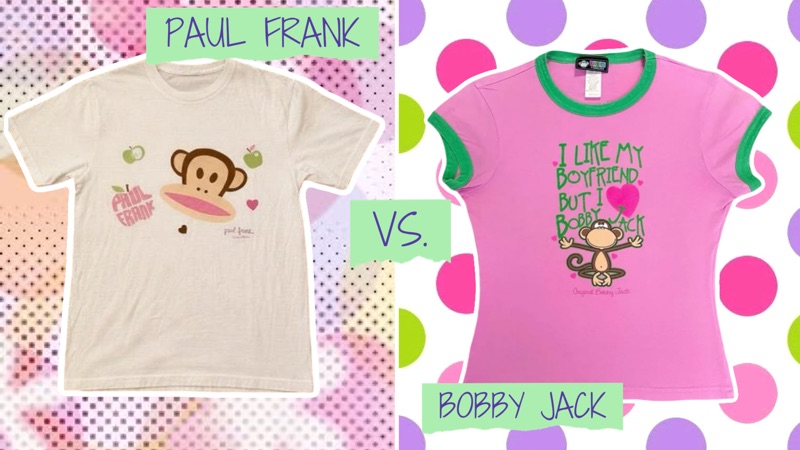
If your parents were loyal to the holy trinity that was your local mall's department stores—for my family, it was Belk, JCPenney, and Sears—you might remember the sassy little mascot characters that seemed to dominate the kids' sections.
I'm talking brands like Happy Bunny, Life Is Good, Sanrio, Little Miss Sunshine, and Mudd, along with the seemingly endless Disney T-shirts featuring some bratty little sayings. My personal go-tos were Thumper from Bambi, Tinker Bell from Peter Pan, and Dopey from Snow White. Just to scratch the surface.
But the reigning sassy mascot on everyone's T-shirt back in the day was a little monkey. Wait. Actually, there were two very popular brands with a monkey mascot....
You might remember Paul Frank. The brand originated in Huntington Beach, California, in 1995, and its signature mascot, Julius the Monkey, quickly became one of the most recognizable characters in early-2000s fashion. Julius showed up on everything. T-shirts, bags, stationery, bedroom accessories—he was the star of the show.
The brand had a cleaner, minimalist graphic style that made it feel a little more chic than your average cartoon-character tee. It became a staple of 2000s pop culture, and celebrities like Hilary Duff, Fergie, and Cameron Diaz were photographed wearing the brand, which only added to that whole it-girl appeal.

Paul Frank eventually became an entire little universe of characters, too. If you were lucky enough to visit one of their brick-and-mortar stores, you might remember Lester the Frog, Clancy the Giraffe, Mika the Cat, and Devil Julius. I don't remember any of these tbh, but looking at the lineup in their archives, I might have to hunt some of them down secondhand. To Depop I go! I guess I'm about to find resellers hoarding these cuties for 300 bucks or whatever. Bummer.
Then there was the other monkey on the block: Bobby Jack. Bobby Jack came onto the scene in the early 2000s and became especially popular once the brand started showing up in department stores around the country. And while Paul Frank had a cleaner, more minimalist aesthetic, Bobby Jack was mid-2000s maximalism at its finest. Bright colors. Bratty little sayings. Loud graphics. And, of course, that snarky little monkey named Bobby Jack.
I don't remember ever owning Paul Frank, but I definitely remember having Bobby Jack. I had a T-shirt with Bobby Jack getting out of a limo, and I think it said something along the lines of “The future's so bright, you have to wear shades.” It even came with printed arm warmers, which my mom would not let me wear to school for some reason. I loved those arm warmers. I still don't know why she wouldn't let me wear them out though.
While Paul Frank was selling a whole lifestyle, Bobby Jack leaned into the fun of being a tween. It was loud, silly, a little bratty, and didn't take itself too seriously. I think that's where the generational distinction starts to show. Paul Frank had that slightly cooler, more minimalist mall aesthetic. It felt like something you'd see on an older girl who was already figuring out her personal style. Bobby Jack, meanwhile, felt like something you'd beg your mom to buy while you were wandering around the kids' department because look at the monkey! He's getting out of a limo! OMG!
And yet, both brands have managed to stick around in one way or another. Bobby Jack continues to release new products and collaborations, while Paul Frank has remained a recognizable piece of 2000s fashion history. Both have also found new audiences online, where younger fans have discovered the brands through the current nostalgia cycle. Which is probably why I have such a hard time putting either one into one generation.
If anything, I think they're another example of that big-sister/little-sister relationship I've been talking about. We were shopping in the same malls, wearing the same kinds of ridiculous graphic tees, and probably fighting with our moms about whether or not we were allowed to wear those silly little arm warmers.
We just weren't necessarily wearing the same monkey.
So... Who Gets To Claim It? ✦
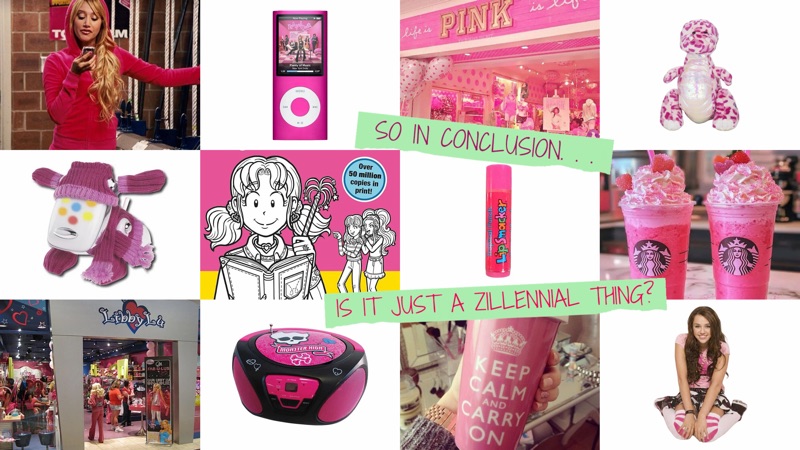
So, after all that... I still don't know. There are definitely certain pop culture things that feel more Millennial or more Gen Z based on my own experience. Maybe it's because I remember my slightly younger neighbors, Avery and Clare, being total Webkinz girlies while I was completely obsessed with Neopets. My slightly older cousin Rachel was a Paul Frank girly, while I loved Bobby Jack. And my cousin Bailey, who's only a few years younger than me, was very Justice-coded while I was all about Limited Too.
And that's what makes this whole thing so hard to pin down. All of this stuff was being marketed to basically the same tween audience, right in the middle of one generation ending and another beginning. But every little corner of it had its own identity. And which one you ended up loving probably had just as much to do with your age as it did your friends, your town, your school, your hobbies, your older cousins, or whatever happened to be at the mall that Saturday.
That's the thing about nostalgia. You can draw all the generational lines you want, but people don't experience culture in neat little boxes. Sometimes kids in the same age group can be Hannah Montana stans, while others gravitate toward Miley. Sometimes you're only two years apart and somehow one of you is shopping at Justice while the other is at Limited Too.
So maybe that's my answer: it’s cross generational, babe.
Some things feel Millennial. Some things feel Gen Z. And some things are just really, really Zillennial.
So choose a side. Or don't. I think Julius the Monkey from Paul Frank wouldn't want us to fight about it. Bobby Jack, on the other hand, absolutely would.


